35 years of judgment: The problem isn't the algorithm, it's human bias
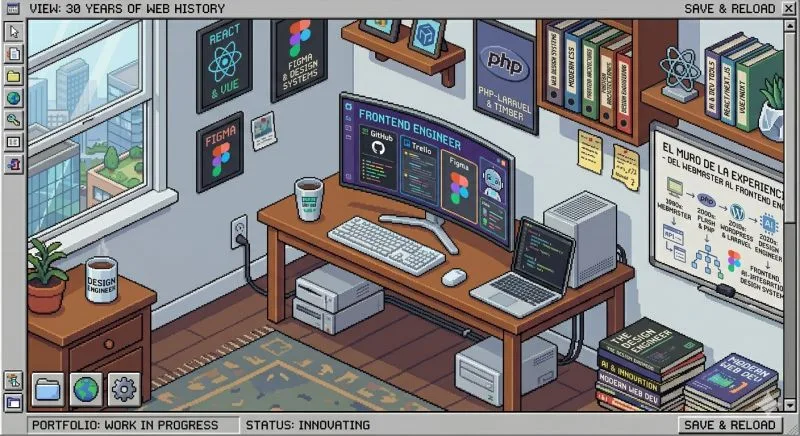
I have lived through the birth of the web and all its mutations.
I come from a background in graphic design in the era of Freehand and Illustrator, but always with one foot in code. I've gone through Macromedia Lingo, the explosion of Flash, the implementation of PHP-Nuke and the growth of WordPress until it became the engine it is today.
I've adapted to each cycle: Timber, Laravel, Angular, React... and now AI. What today they call Design Engineer, for me has been a natural evolution for decades: making aesthetics and logic converge.
But here comes the deep reflection: We often blame the algorithm for automatic rejections in just minutes, but perhaps we're missing the target. An algorithm, if programmed purely to search for solvency, demonstrated adaptability and technical judgment, would put my profile (and that of many seniors) at the very top of the list. The machine has no prejudices; it is a mirror of who configures it.
The real wall is not a line of code, but the human bias that decides that "more than 35 years of experience" is a threat or an excess, instead of an asset of incalculable value. We are using technology to validate prejudices instead of leveraging talent.
In the age of AI, execution becomes a commodity, but judgment is the luxury. Knowing what you want to achieve, why, and how to guide artificial intelligence is what really makes the difference between a mediocre product and an excellent one.
After years as a freelancer, I'm looking for the stability of a project where I can contribute all this background. I'm not just looking for "work"; I'm looking for a space where my judgment is an engine of quality.
But here comes the bitter part: I have applied to dozens of positions where I match the profile 100% and I'm rejected within minutes.
How can a system discard in seconds a trajectory of 35 years of constant adaptation? This reality leads me to denounce the systematic "ghosting" and lack of professionalism from some recruiters. It's not a matter of not knowing how to do the "homework" (I personalize every contact, I care for every detail); it's a structural problem:
- Technological ageism: Mastery of a specific framework from this month is prioritized over the resilience of someone who has learned and mastered ten different technological cycles.
- Fear of overqualification: A profile that only "writes" code is preferred over someone who brings judgment, business vision and the solvency of someone who has already made (and solved) every possible mistake.
In the age of AI, technology can assume execution, but the differentiating value is judgment. Knowing what you want to achieve, why, and how to guide the machine is what really makes the difference in a scalable and professional final product.
After years as a freelancer, I'm looking for the stability of a project where I can contribute all this background. I'm not just looking to execute quickly; I'm looking to bring maturity and product vision.
I would like to open the debate: Why is it so hard for us, as a sector, to value professional maturity? Are we humans losing judgment when it comes to recognizing real talent?